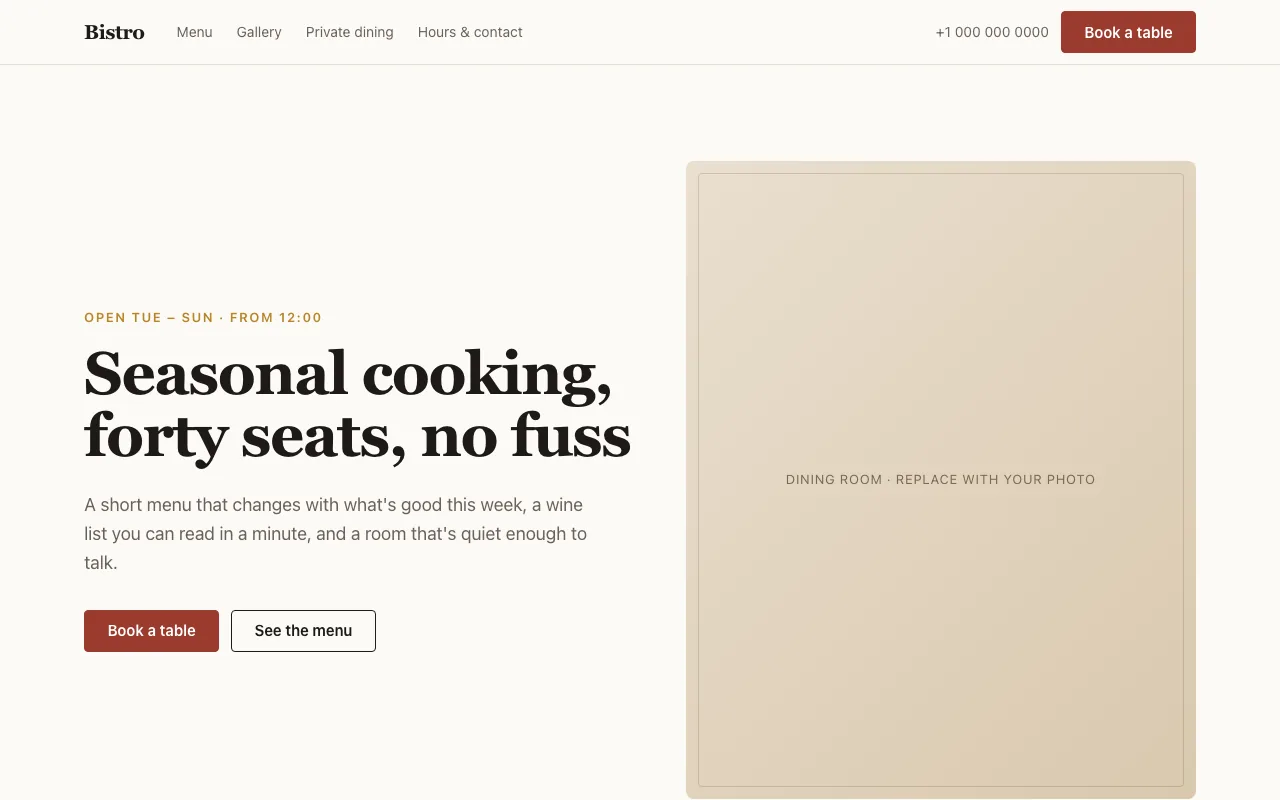
A restaurant site in Tailwind: menu with anchor sections, table booking form, gallery, hours and contact, plus a private-dining page and a 404 in Pro. Schema.org markup for the venue and the menu.
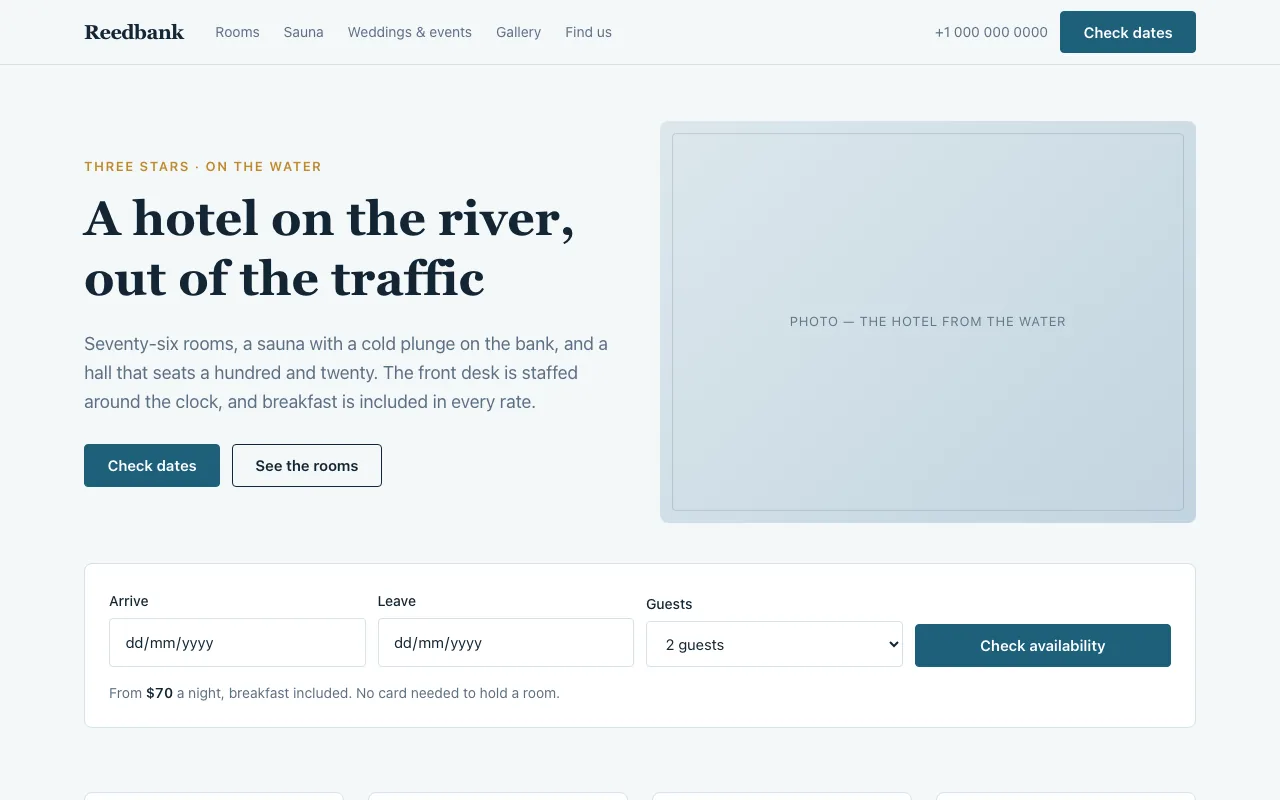
A hotel site in Tailwind: the date form on the first screen with the rate beside it, rooms with what is in them, sauna, weddings and events, gallery and a booking page. Eight pages, no JavaScript needed.
The home page and its CSS — enough to publish a one-pager. A credit link stays in the footer.
Every page, the Pro-only pages, the source files, no attribution, and 12 months of updates and email support.
Use it in unlimited personal and commercial projects, including client work.
Do not resell the template itself, alone or in a bundle.
Someone opening a hotel site has one question: is there a room on my dates. Everything else — the view, the sauna, the hall — is an argument that only matters after the answer. So the form sits on the first screen with the nightly rate written next to it, above the gallery rather than below it.
It submits nowhere until you point it at your own system. A template cannot know whether your bookings go to an inbox, a channel manager or TravelLine, and a form that quietly posts into the void is worse than one that says what it is. The README has the two lines to change.
Bed size, bath or shower, whether the window faces the courtyard or the water, whether a cot is free. Four room types including an accessible double at the same rate as the ordinary one, with the step-free route described rather than implied by an icon.
For a lot of hotels the banquet and conference rooms earn more than the beds, and they are usually given one line at the bottom of the home page. Here they have their own page with capacity, guide prices and what is already in the price — and the argument that sells them: guests who stay late are already at their hotel.
The template ships with labelled placeholder blocks — “Photo — double, river side” — not with
pictures of somebody else’s hotel. Each block says what belongs in it, so the list doubles as a
brief for whoever takes the photographs. The README shows the one-line swap to a real image,
with the width, height and loading attributes that keep the page from jumping.
Twenty-four custom properties at the top of src/input.css, twelve for light and twelve for
dark. Change --brand and every button, link and focus ring follows; there is no other place
colour is written. Dark mode follows the visitor’s system unless they have chosen light.
Running the hall as well? Agenda is a weekly planner for the bookings and Tick a checklist for the set-up days.
First release
A restaurant site in Tailwind: menu with anchor sections, table booking form, gallery, hours and contact, plus a private-dining page and a 404 in Pro. Schema.org markup for the venue and the menu.
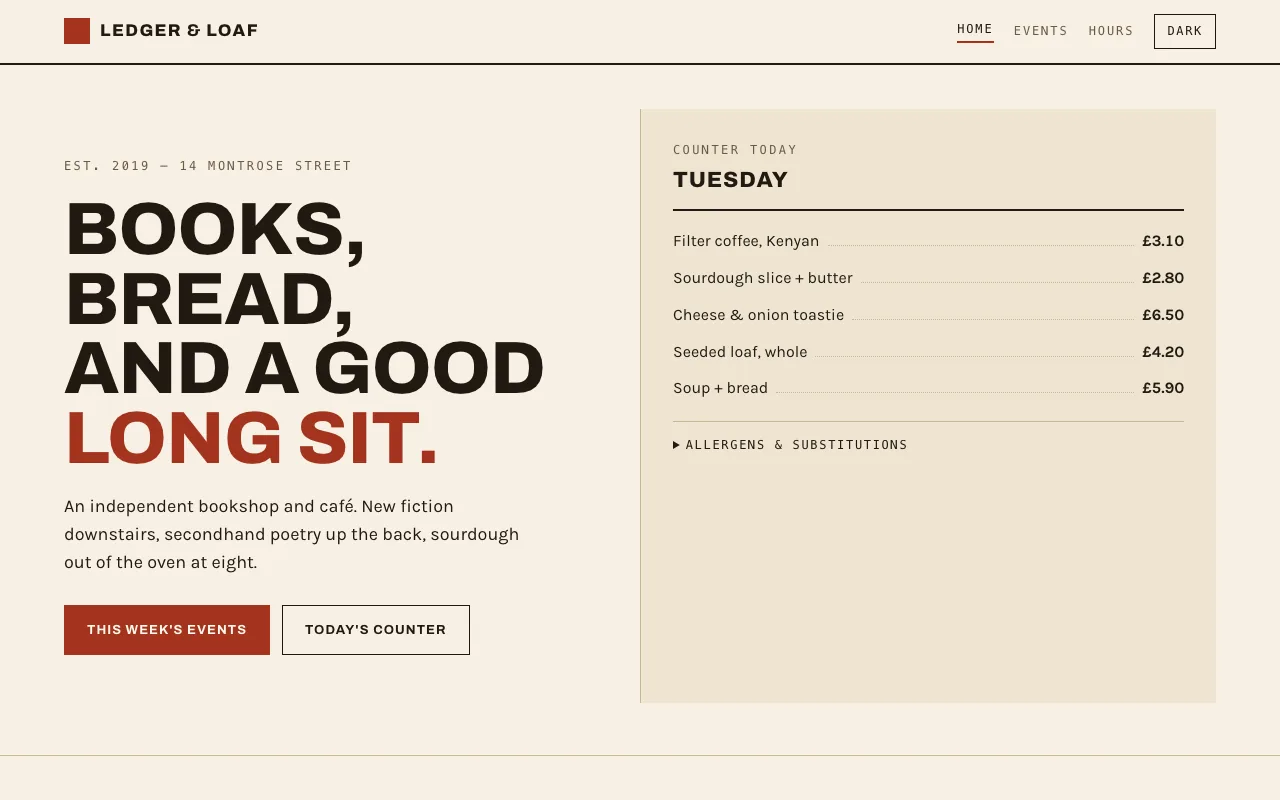
A shop site with a counter price list, a week of dated events and opening hours, in a 1970s ledger-book style: warm paper, oxblood ink, dotted-leader rows, squared corners. Plain HTML and one stylesheet, no images, no build step.
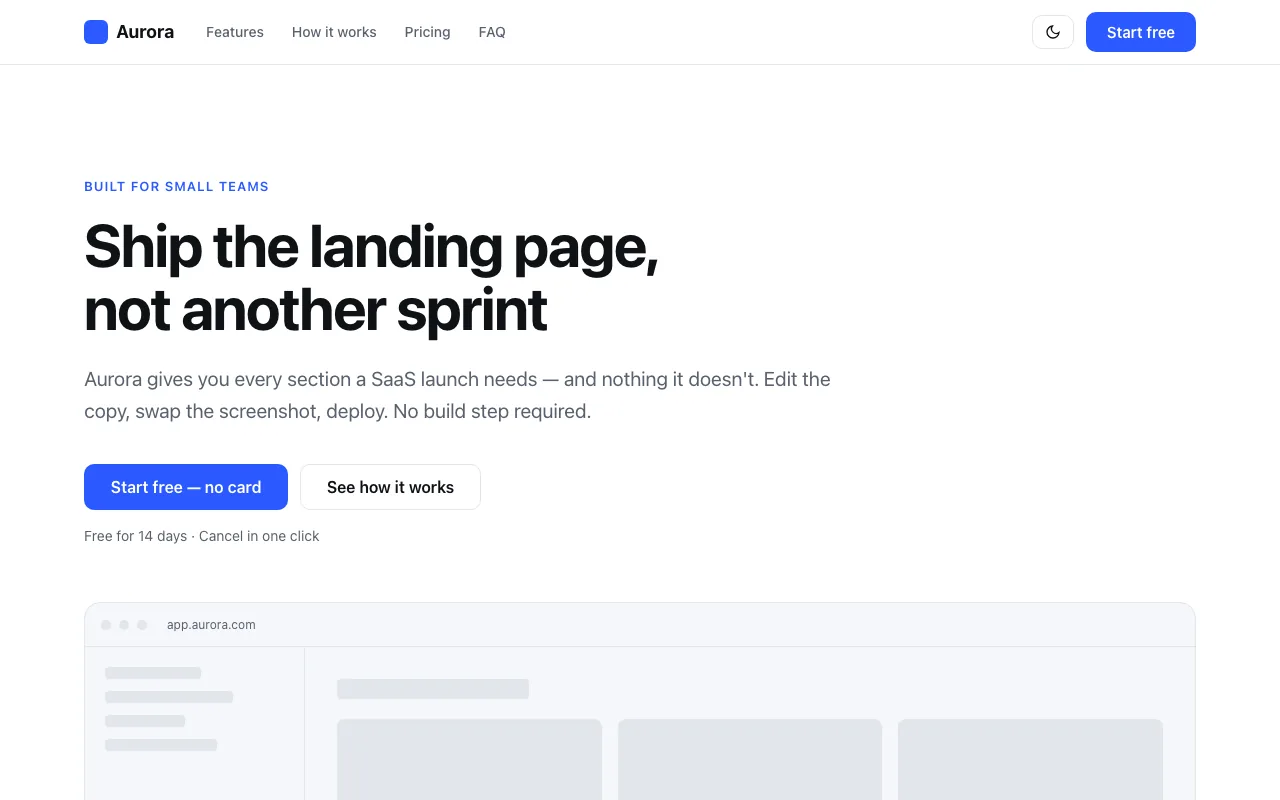
A one-page SaaS landing template with pricing, testimonials and FAQ, plus a full pricing page and a 404 in Pro. Tailwind, dark mode, zero external dependencies.