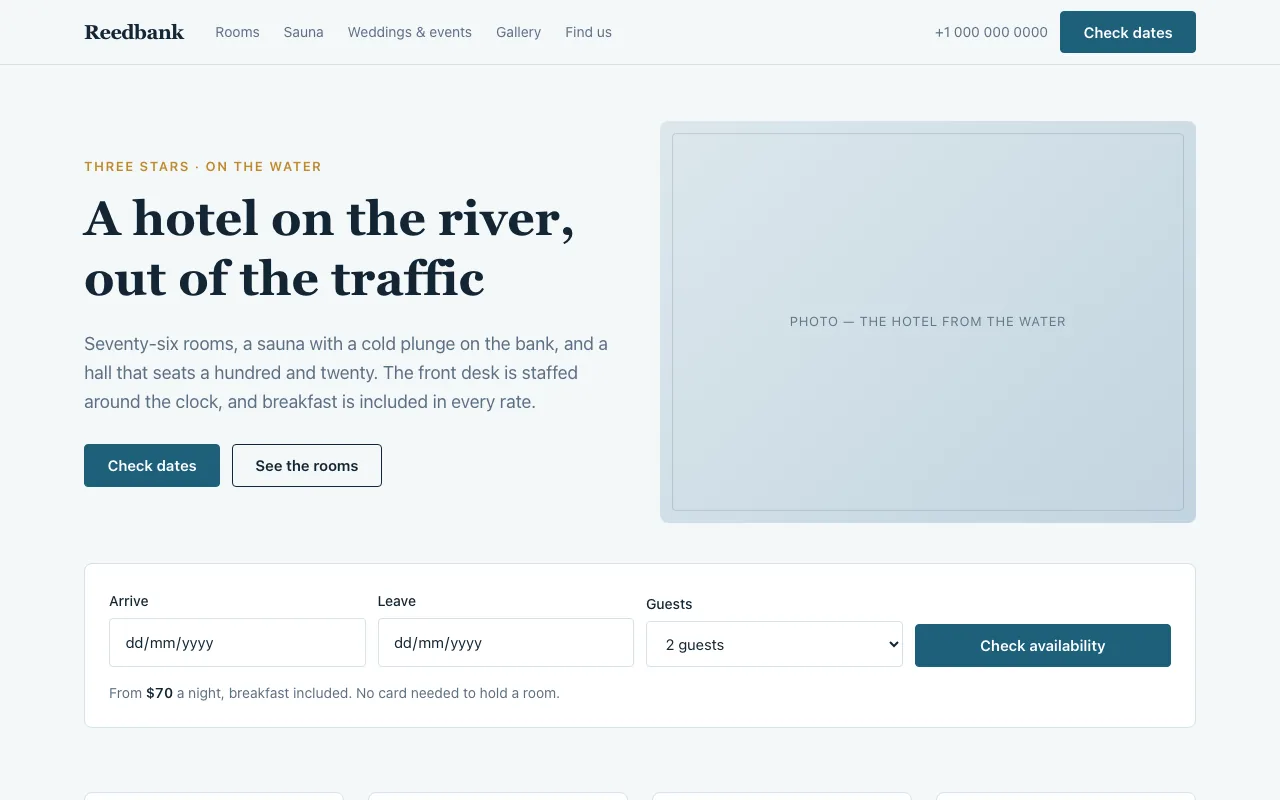
A hotel site in Tailwind: the date form on the first screen with the rate beside it, rooms with what is in them, sauna, weddings and events, gallery and a booking page. Eight pages, no JavaScript needed.
- HTML5
- Tailwind 4
- Dark mode
Templates for places people book a night in. The date form comes before the gallery, because that is the question a visitor arrives with.
A hotel site in Tailwind: the date form on the first screen with the rate beside it, rooms with what is in them, sauna, weddings and events, gallery and a booking page. Eight pages, no JavaScript needed.
Someone opening a hotel site is checking one thing: have you got a room on their dates. The view, the restaurant and the spa only matter after that answer, so a template that opens with a full-screen photograph and hides the dates below it is answering the wrong question first.
A date form on the first screen with a rate next to it. Rooms with what is actually in them — bed size, bath or shower, whether the window opens. A page for the hall if you rent one, because weddings and company evenings are often the better half of the revenue. Directions that cover arriving by car at two in the morning.
The home page with the date form and the compiled stylesheet, usable commercially with a credit link in the footer. Pro has the remaining pages, the Tailwind source and no credit.
It submits nowhere until you point it at your own system — an inbox, a channel manager, TravelLine. A template cannot know where your bookings should land, and a form that quietly posts to nowhere is worse than one that says so. The README has the two lines to change.
No, and that is deliberate. They ship with labelled placeholder blocks that say what belongs in each slot, so you can hand the list to a photographer. Stock pictures of someone else's hotel help nobody.
Yes, including commercially, as long as the credit link stays in the footer.