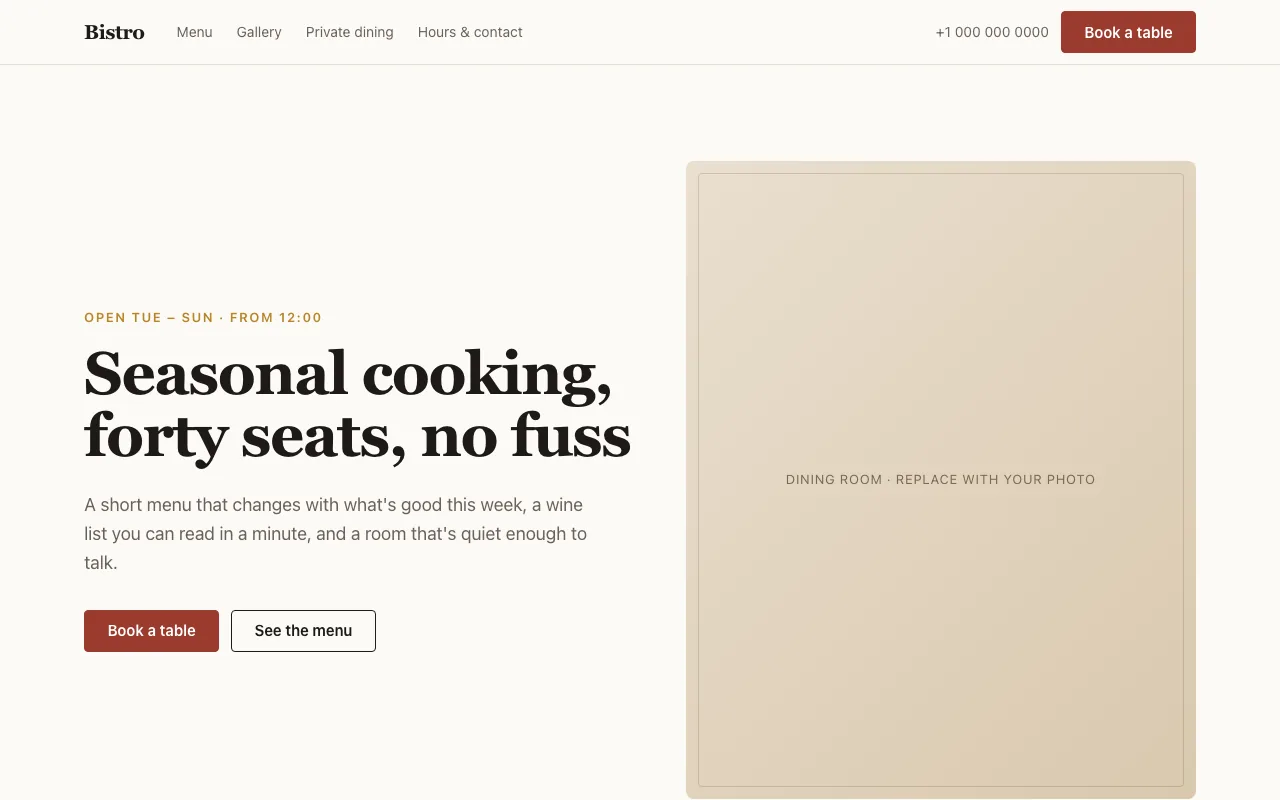
A restaurant site in Tailwind: menu with anchor sections, table booking form, gallery, hours and contact, plus a private-dining page and a 404 in Pro. Schema.org markup for the venue and the menu.
- HTML5
- Tailwind 4
- Schema.org
Sites built around the three things people actually open a restaurant website to do: read the menu, check the hours, and book a table.
A restaurant site in Tailwind: menu with anchor sections, table booking form, gallery, hours and contact, plus a private-dining page and a 404 in Pro. Schema.org markup for the venue and the menu.
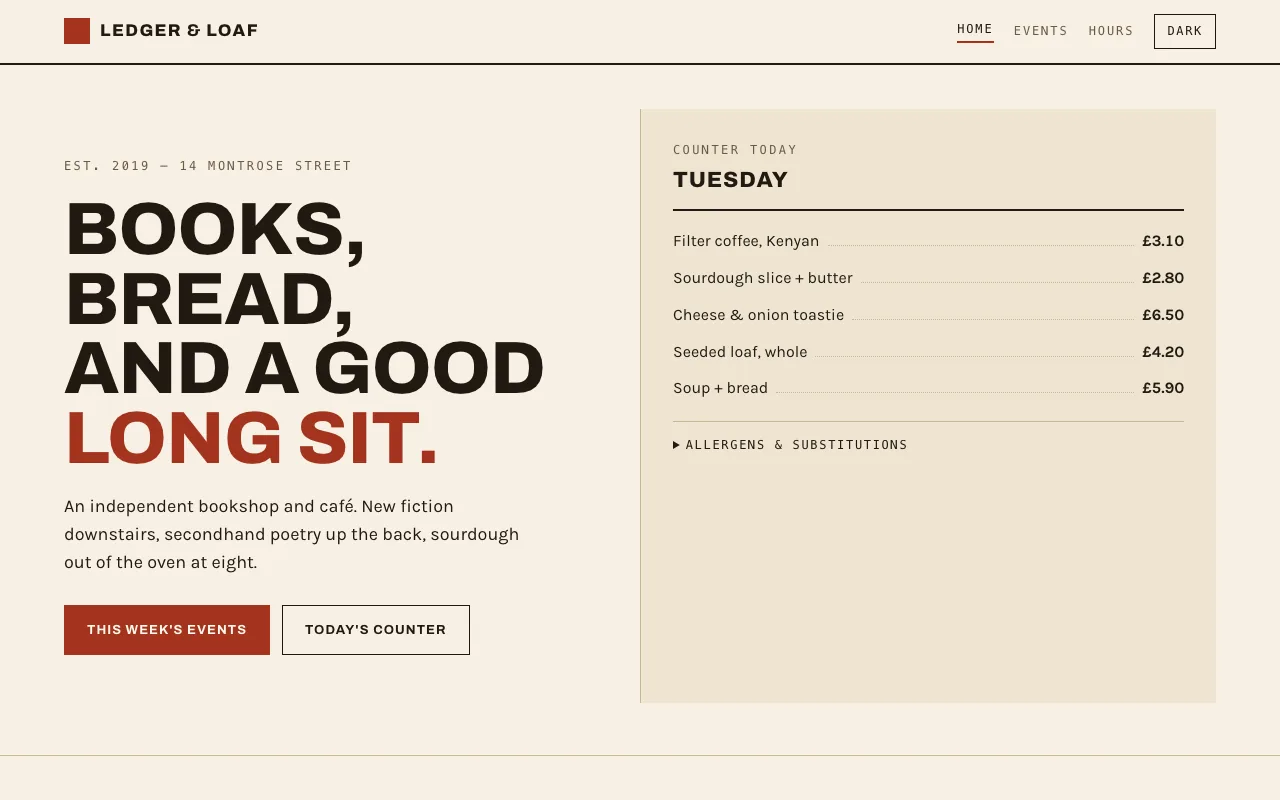
A shop site with a counter price list, a week of dated events and opening hours, in a 1970s ledger-book style: warm paper, oxblood ink, dotted-leader rows, squared corners. Plain HTML and one stylesheet, no images, no build step.
Almost all of the traffic is on a phone, often outside, often in a hurry. Test any template you are considering at 360 pixels before you judge it on a laptop.
A single page works for a small place with one menu — everything scrolls, nothing is more than a thumb-flick away. Several pages start to pay off once you have separate lunch and dinner menus, private hire, or events worth their own indexed URL.
The free version is the home page — hero, featured dishes, hours and a booking call to action — with compiled CSS. Pro has the menu, reservations, gallery, contact, private dining and 404. Schema.org Restaurant markup is built in, which is what search engines use to build the listing card — most templates in this category ship without it.
No. The button hands you the ZIP directly. No form, no email address.
Yes. The paid licence covers client work with no attribution required.
Yes, within 14 days if the template is faulty or not as described. Check the live demo and the free version first — both are there for that.