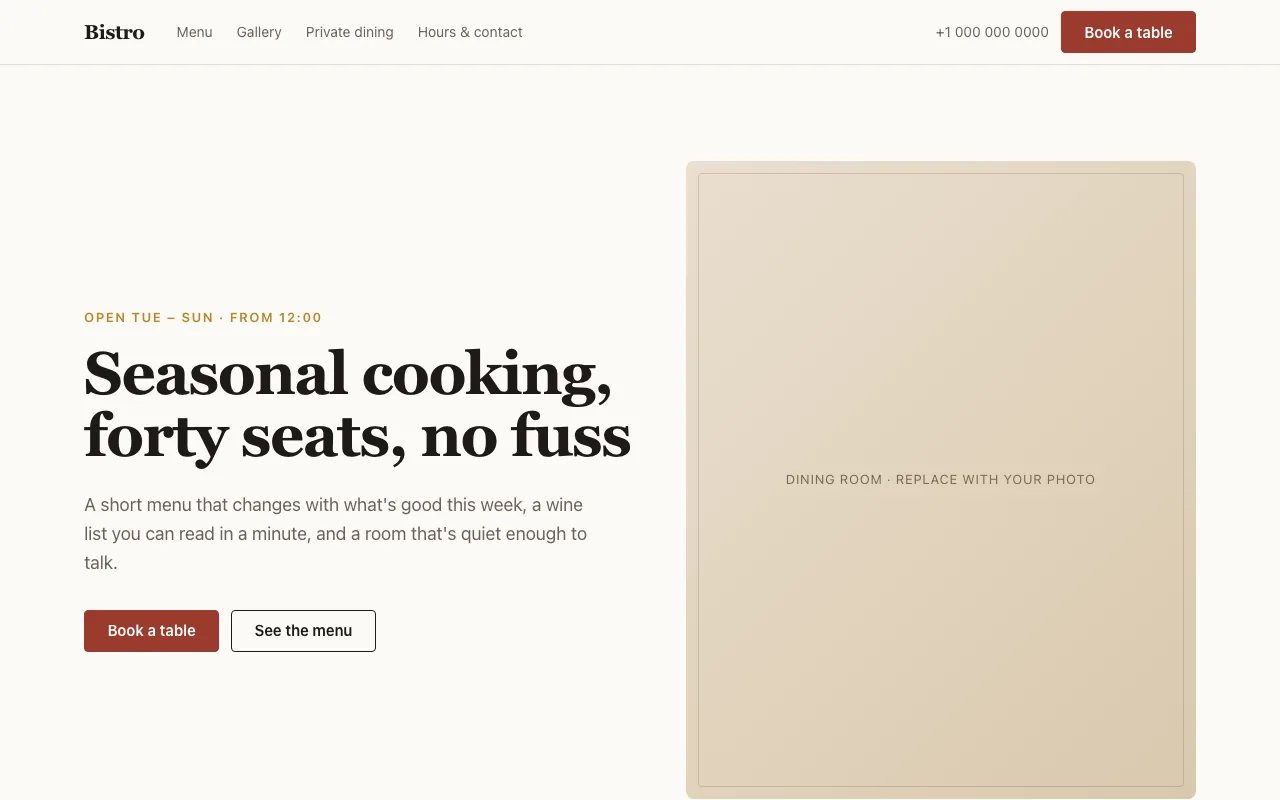
A restaurant site in Tailwind: menu with anchor sections, table booking form, gallery, hours and contact, plus a private-dining page and a 404 in Pro. Schema.org markup for the venue and the menu.
A storefront in Tailwind: home, shop with category sections, product page with variants and stock states, cart, shipping and returns, plus an FAQ and a 404 in Pro. No JavaScript, Schema.org Product markup, ready for Snipcart or a Buy Button.
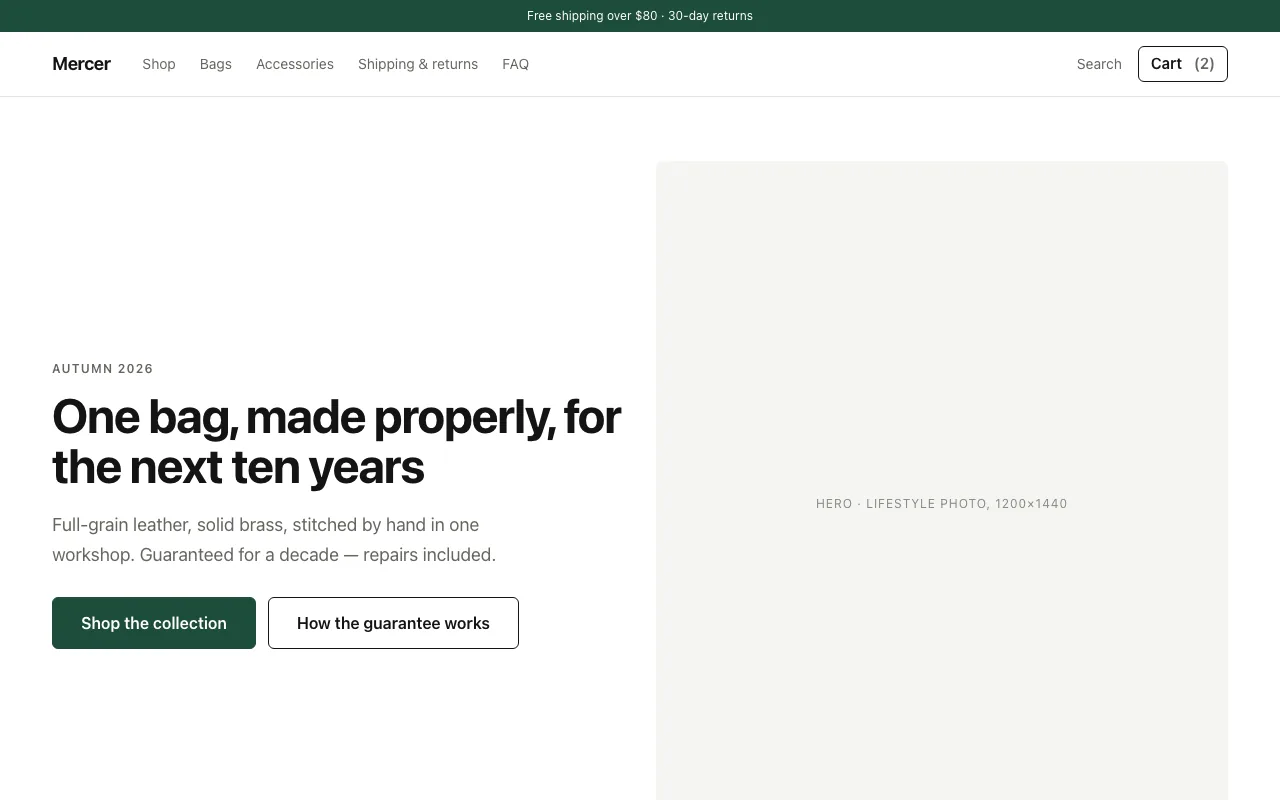
The home page and its CSS — enough to publish a one-pager. A credit link stays in the footer.
Every page, the Pro-only pages, the source files, no attribution, and 12 months of updates and email support.
Use it in unlimited personal and commercial projects, including client work.
Do not resell the template itself, alone or in a bundle.
Mercer is a storefront for a small catalogue — a dozen products, not a thousand. It puts the effort where a small store’s money is: a product page that sells, and a shop page that doesn’t need a search engine to be usable.
Five pages sharing one header, footer and product card through src/partials/, so a
price format or a nav link changes in one place.
Colour and strap are radio inputs styled as chips — keyboard accessible, no JavaScript,
and a sold-out option is a disabled radio with a strike-through, not a hidden one. Details,
shipping and the guarantee sit in a native <details> accordion. Schema.org Product
markup with price, availability and return policy is wired in for rich results.
The add-to-cart button already carries Snipcart’s data-item-* attributes: add their
script and the store takes orders. For Shopify or Stripe, swap the button for their embed —
the rest of the page stays. The cart page is a static order-review layout you keep or drop.
The shop sidebar links to sections on the page, so every filtered view has a real URL
(shop.html#bags) and works with JavaScript off. When you move to a platform, those become
collection pages.
Every photo is a labelled placeholder in a 4:5 slot. Prices, product names and the nine
products in the grid are {{card …}} lines in the page sources — one line per product.
Dark mode: follows the system, no JavaScript; cards sit a step above the page
FAQ page and 404 added to Pro; free archive is now the home page
First release
A restaurant site in Tailwind: menu with anchor sections, table booking form, gallery, hours and contact, plus a private-dining page and a 404 in Pro. Schema.org markup for the venue and the menu.
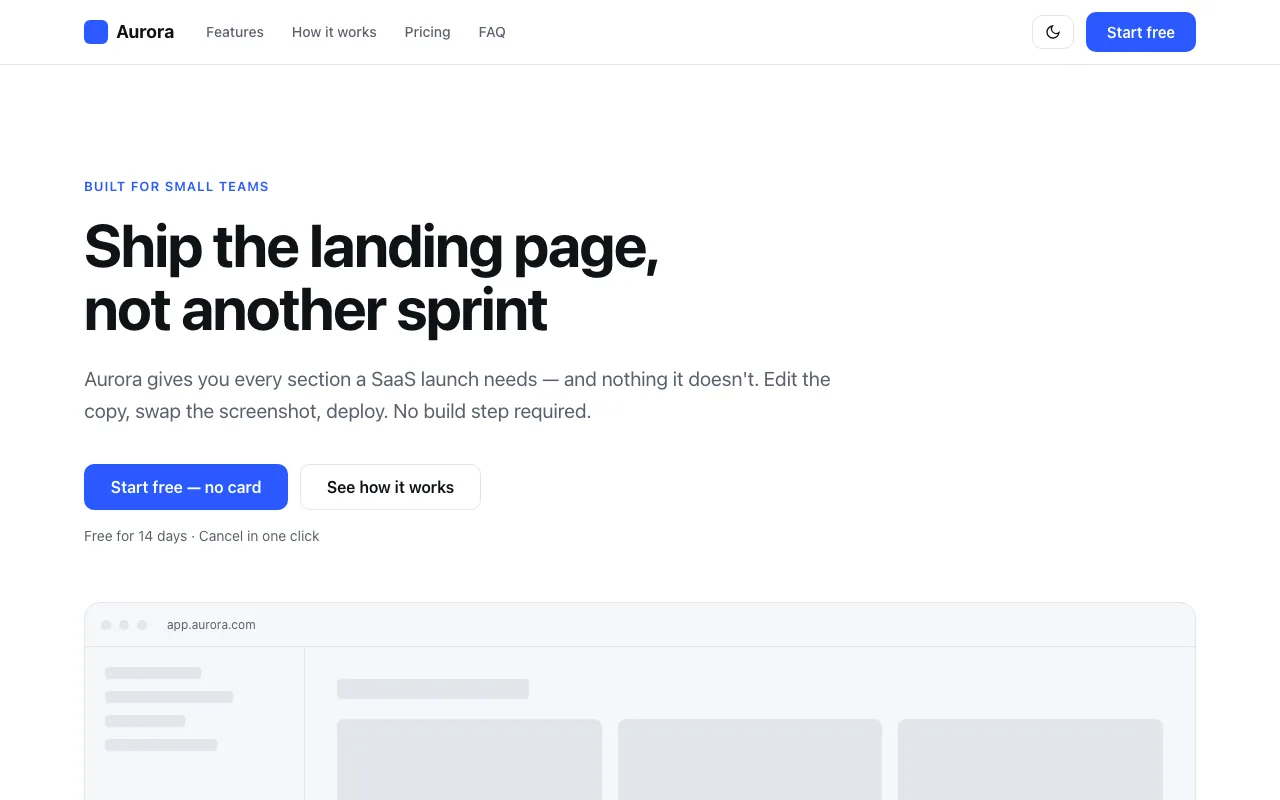
A one-page SaaS landing template with pricing, testimonials and FAQ, plus a full pricing page and a 404 in Pro. Tailwind, dark mode, zero external dependencies.
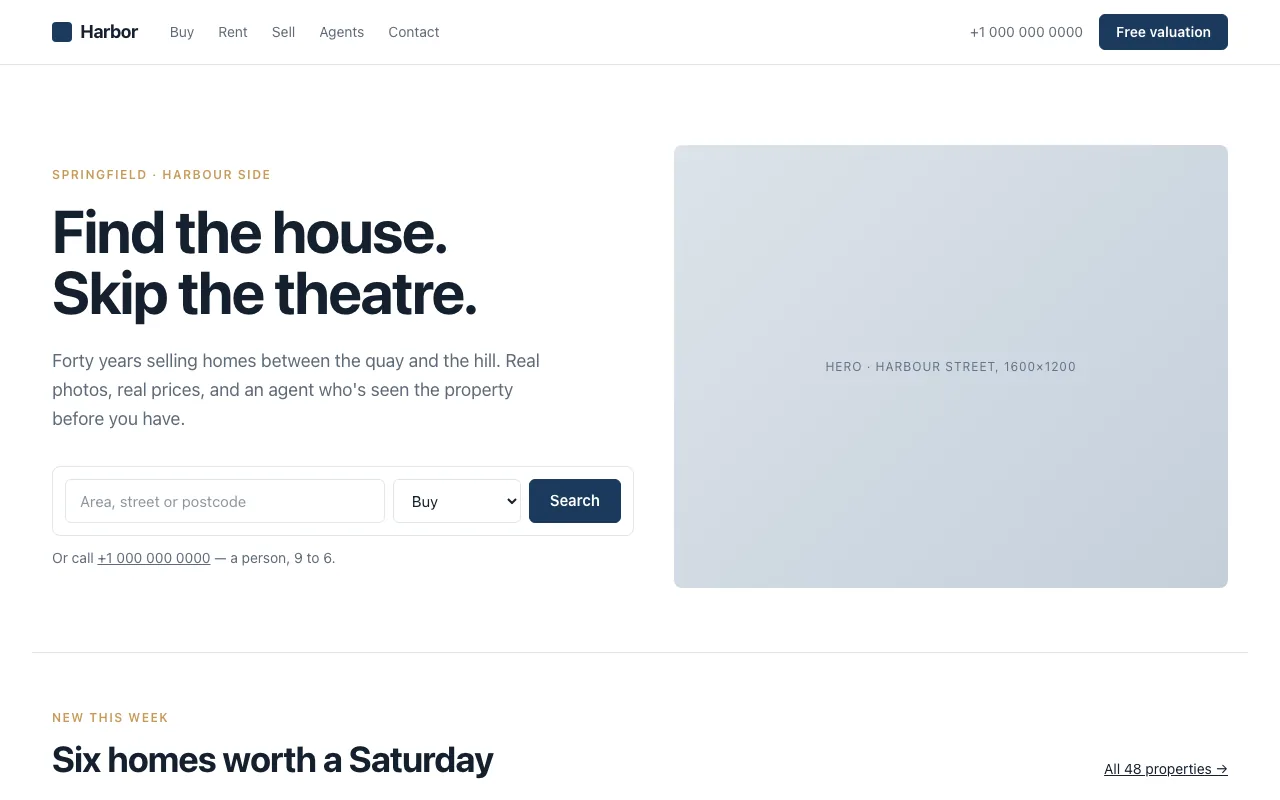
An estate agency in Tailwind: listings with filters as real links, a property page with gallery, room sizes, floor plan, map and enquiry form, agents with direct numbers, plus a valuation funnel and a 404 in Pro. No JavaScript, RealEstateListing markup.